

Occupational Varifocals Glasses
What Are Occupational Varifocals?
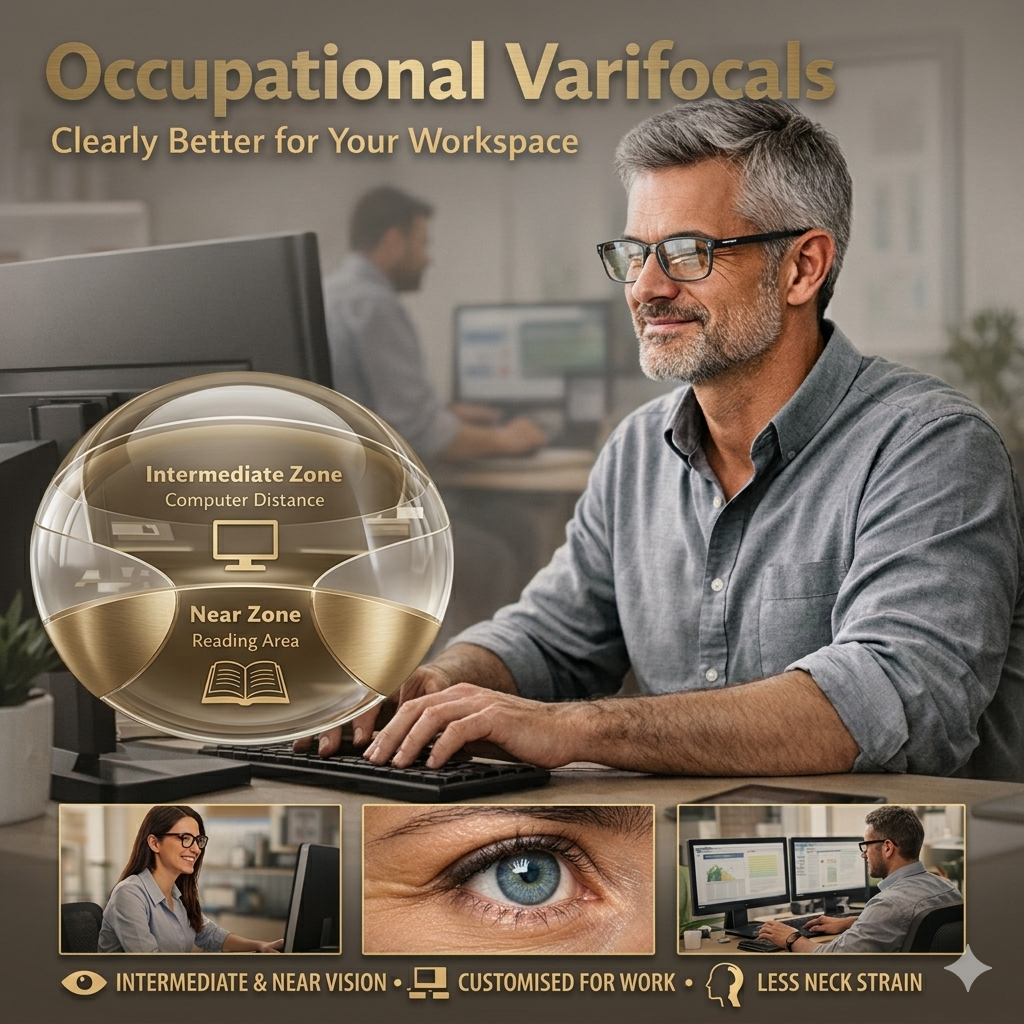
Occupational varifocals (sometimes called “office lenses” or “computer varifocals”) are specially designed lenses tailored for indoor tasks and working environments. Unlike standard varifocals that cover distance, intermediate, and near vision, occupational lenses focus primarily on intermediate (screen distance) and near vision (reading, desk work).
How Are They Different from Standard Varifocals?
Standard varifocals are built for all-day, all-distance use—from driving to reading. Occupational varifocals, on the other hand, are optimized for a specific range of distances, making them far more comfortable for focused tasks.
Key differences:
- Wider intermediate zone → better for computer screens
- Larger reading area → easier document viewing
- Reduced neck strain → no need to tilt your head to find focus
- Limited distance vision → not suitable for driving
Who Should Use Occupational Varifocals?
These lenses are perfect for:
- Office workers and remote professionals
- Anyone using screens for 4+ hours a day
- Tradespeople working at bench distance
- People experiencing neck or eye strain with standard varifocals
- Over-40s dealing with Presbyopia
If you’ve ever found yourself constantly adjusting your posture just to see your screen clearly, occupational varifocals can be a game-changer.
Key Benefits
1. Enhanced Comfort
With a lens designed around your workspace, your eyes don’t need to constantly refocus—reducing fatigue throughout the day.
2. Improved Posture
No more tilting your head back to find the “sweet spot” in your lenses. This helps prevent neck and shoulder pain.
3. Increased Productivity
Clear vision across your desk setup means less time adjusting and more time working efficiently.
4. Customisable Viewing Zones
Different occupational lenses can be tailored depending on how far your screen is from your eyes.
Types of Occupational Varifocals
There are typically three main types, depending on your working distance:
- Near Focus (0.4m – 1m): Ideal for reading and close-up tasks
- Mid Range (up to 2m): Perfect for desk setups and dual monitors
- Extended Range (up to 4m): Suitable for offices where you need to see across the room
Your optician will recommend the best type based on your daily routine.
Are There Any Downsides?
While highly effective, occupational varifocals do have limitations:
- Not suitable for driving or long-distance viewing
- May require a second pair of glasses for everyday use
- Initial adjustment period (usually a few days)
However, for work-specific use, the benefits far outweigh these minor drawbacks.
Are Occupational Varifocals Worth It?
If your day revolves around screens, paperwork, or detailed close-up work, occupational varifocals are not just a luxury—they’re a practical upgrade.
They reduce strain, improve posture, and make your working environment far more comfortable. For many users, once they switch, they don’t go back.
Final Thoughts
In today’s screen-heavy world, your glasses should adapt to your lifestyle—not the other way around. Occupational varifocals provide a tailored solution that supports how you actually work, helping you stay comfortable, focused, and productive throughout the day.